2026-03-11
IDAS Series –The Surprising Effects of the Trump Shock on the Global Order: Losers, Winners, and Strategic Dynamics
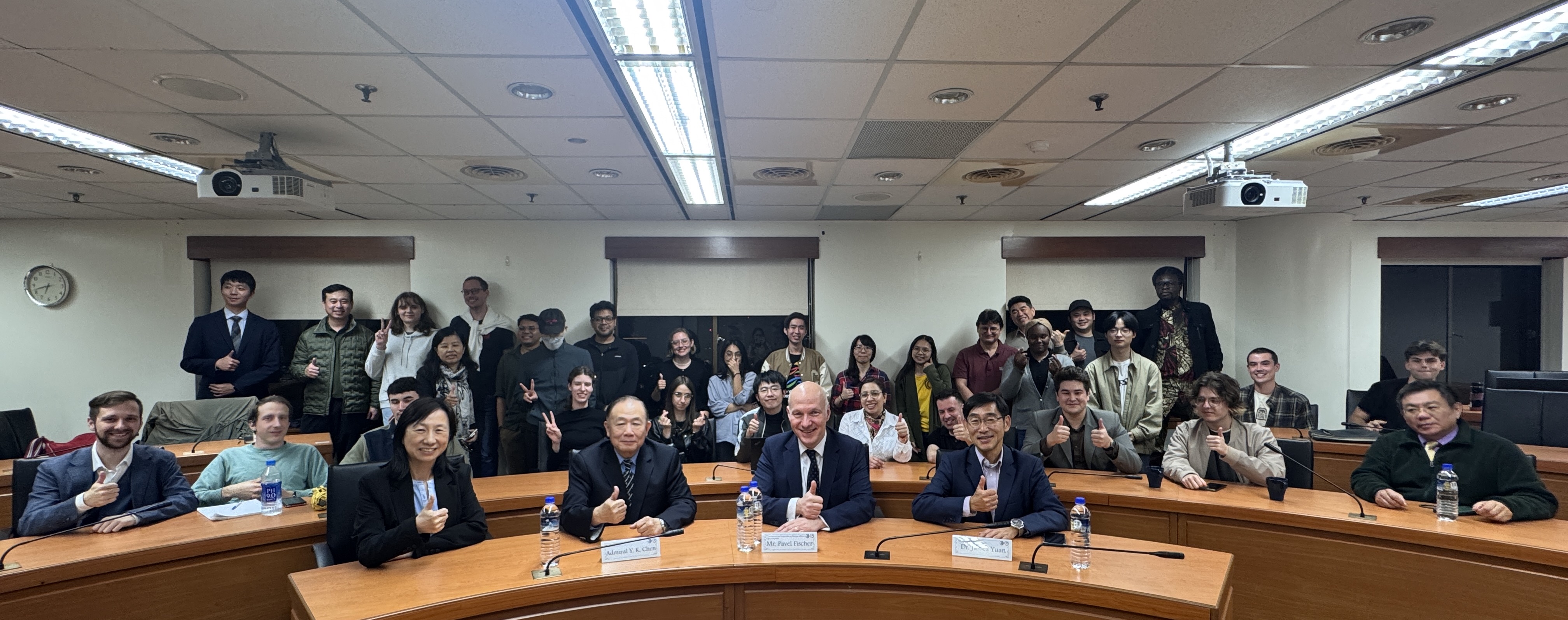
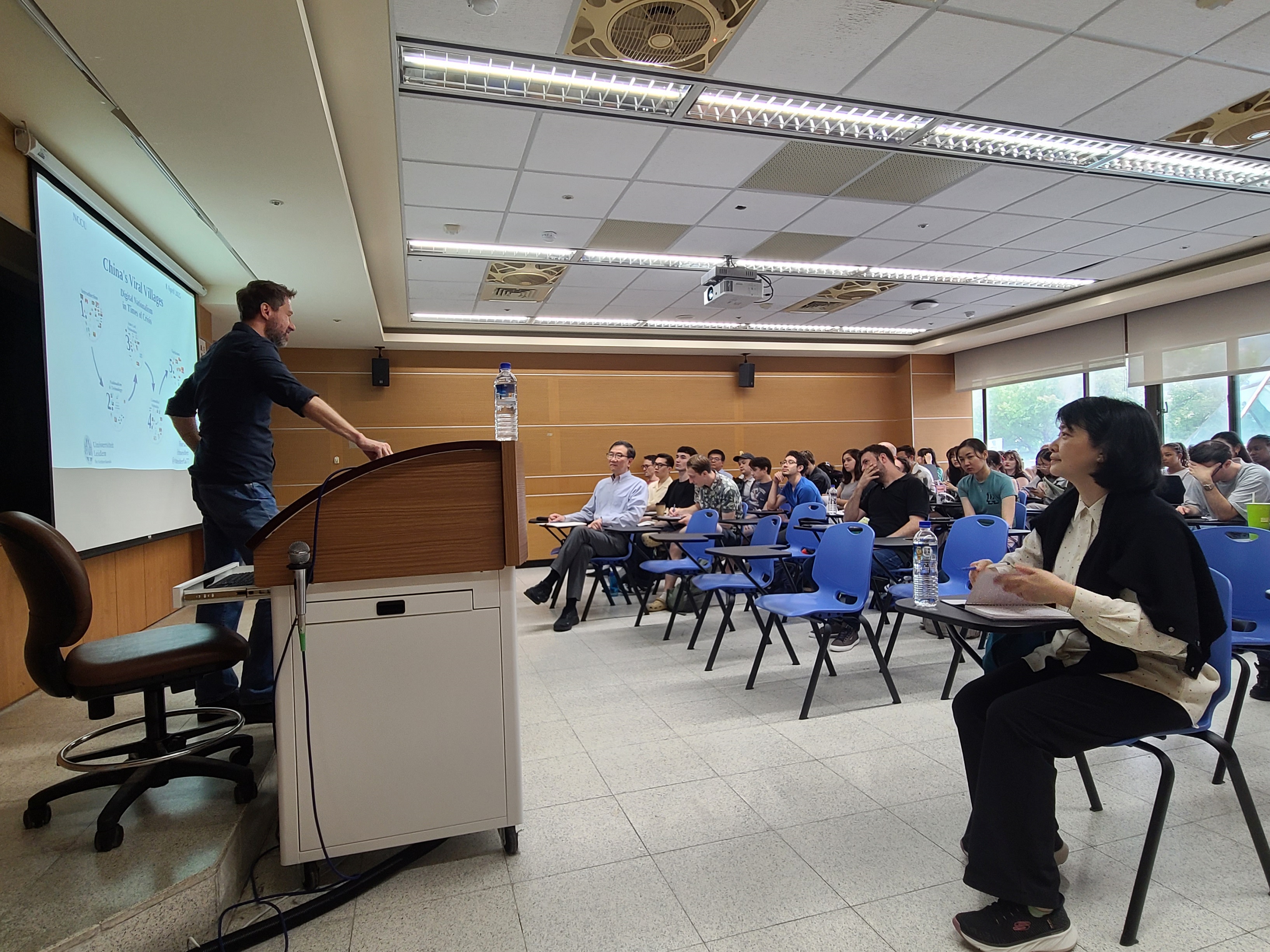
On 2 March 2026, International Doctoral Program on Asia-Pacific Studies (IDAS) hosted a guest lecture by Dr. Yves Tiberghien, Adjunct University Chair Professor at IDAS, NCCU, and Professor of Political Science at University of British Columbia. The lecture, titled “The Surprising Effects of the Trump Shock on the Global Order: Losers, Winners, and Strategic Dynamics,” examined the systemic consequences of recent shifts in U.S. foreign policy under the Trump 2.0 administration and their impact on the evolving international order.
Dr. Tiberghien began by arguing that the current international system is not fundamentally broken but rather “ruptured.” This distinction provides an important conceptual lens to rethink contemporary developments in IR and IPE. According to him, the rules and institutions of the liberal international order have been deeply shaken by recent political developments, particularly the policy direction associated with the return of Donald Trump to power. To contextualize these developments historically, Dr. Tiberghien referred to the words of John Ikenberry of Princeton University, who described how the United States became the “owner and operator” of the liberal capitalist system supporting the institutions of liberal internationalism while enjoying special privileges. The U.S. not only built the post Cold War international order but also benefited from a privileged position within it. However, Dr. Tiberghien argued that recent U.S. policies, including reduced commitment to multilateral institutions and international agreements, have gradually eroded trust in American leadership.
In analyzing developments over the past year, Dr. Tiberghien categorized them into surprises and puzzles. One major surprise was the revival of a “G2” dynamic between the United States and China. The tone in Washington toward Beijing has shifted toward a more transactional and business-oriented approach, reflecting Trump’s deal-making style. Another surprising outcome concerns global trade patterns. Despite tariffs, sanctions, and geopolitical tensions, global trade did not experience a major decline and remained relatively resilient. He also highlighted the rapid increase in investment in artificial intelligence. According to his analysis, tariff policies and geopolitical competition have indirectly stimulated massive investment in advanced technologies. He also discussed the debate between the U.S. Department of Defense and the AI company Anthropic over highly autonomous military technologies. Concerns have emerged regarding the development of automated AI weapons capable of large-scale destruction and mass surveillance. Anthropic reportedly released a detailed statement addressing the ethical implications of such technologies, illustrating tensions between innovation and societal safety.
Despite global turbulence, some countries have navigated these changes relatively well. Notably, Vietnam and several Southeast Asian states have demonstrated resilience. Vietnam’s “bamboo diplomacy,” characterized by flexible balancing and hedging between major powers, has allowed it to manage geopolitical pressure effectively. Similarly, India was described as a “hedger in chief,” employing micro-hedging strategies to maintain strategic autonomy. Dr. Tiberghien referred to the August 2025 Tianjin meeting of the Shanghai Cooperation Organisation, where leaders including Narendra Modi, Xi Jinping, and Vladimir Putin demonstrated diplomatic engagement suggesting potential rule-making coalitions.
Dr. Tiberghien then examined broader geoeconomic outcomes. He praised the efforts of the ASEAN, which continues to promote regional stability. In 2025, Southeast Asia experienced comparatively positive geoeconomic outcomes. He noted that China and India are accelerating technological development in response to U.S. leadership in AI, while Taiwan and South Korea remain resilient due to their roles in global technology supply chains. Taiwan, in particular, plays a crucial role in advanced semiconductor manufacturing. Recognizing this strategic importance, Taiwanese policymakers increasingly adopt a geoeconomic approach in their engagement with the U.S.
Some Northern allies face greater challenges. While Japan has maintained political stability under PM Takaichi, relations between Japan and China have become more strained, particularly following statements regarding Taiwan. The global governance of emerging technologies remains fragmented. Although the EU has pioneered regulatory initiatives such as the AI Act, international coordination has stalled, resulting in a deadlock in global AI governance.
Dr. Tiberghien emphasized that the world faces systemic risks associated with fragmented digital rules and shifting power dynamics. Drawing on theories of systemic power transition and hegemonic realism, he argued that transitions between hegemonic and rising powers historically produce shocks throughout the international system.
In his concluding remarks, Dr. Tiberghien quoted Mark Carney at the 2026 World Economic Forum in Davos: “The middle powers must act together.” Despite recent shocks, he concluded that the international system has largely been able to absorb disruptions without widespread catastrophe.
During the Q&A session, discussions addressed hedging strategies, technological competition, AI governance, and middle-power leverage. Dr. Tiberghien emphasized that states increasingly adopt diverse and flexible hedging strategies, making rigid categorization difficult. Successful middle powers identify niche capabilities and become indispensable within the system. In this regard, he highlighted Taiwan’s semiconductor industry as a key example.
Finally, he encouraged younger scholars to study historical “periods of destruction and transformation” and suggested that intellectual detachment combined with creativity and compassion can help scholars navigate the uncertainties of contemporary international relations.





, assistant profess.jpg)